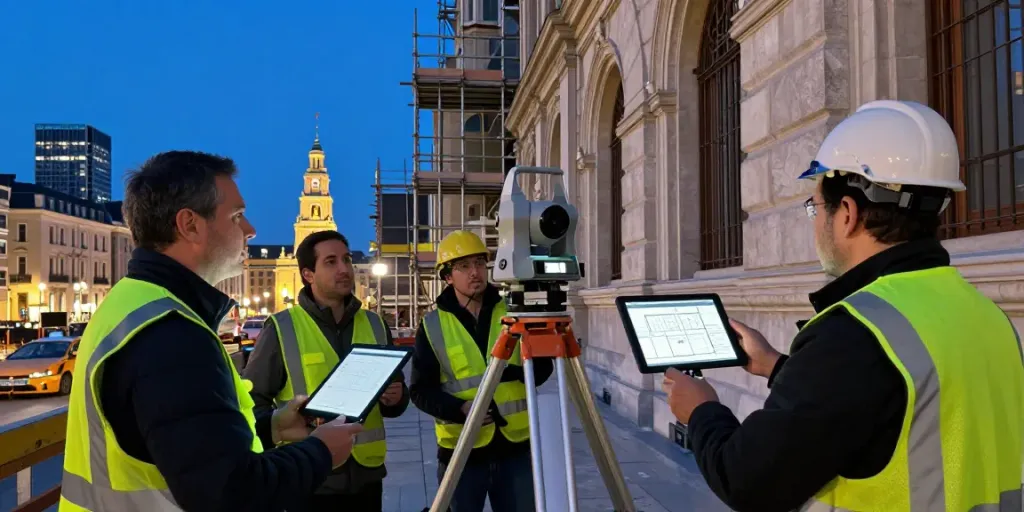
Understanding 3D Laser Scanning Technology
In the evolving landscape of construction and architecture, 3D laser scanning has emerged as a transformative technology, offering unparalleled precision and efficiency. This innovative technique captures detailed measurements of physical spaces, facilitating the creation of accurate digital models for use in various applications. As London's skyline continues to evolve, the integration of this technology becomes increasingly vital for surveyors, contractors, and architects aiming to maintain competitive edges in a fast-paced environment. When exploring options, 3D Laser Scanning London provides comprehensive insights that can be crucial for your projects.
What is 3D Laser Scanning?
3D laser scanning is a non-contact measurement technology that captures the physical features of an object or environment in high detail. By emitting laser beams, a scanner measures the distance between the device and the surface, producing millions of data points, known as a point cloud. This data can then be processed to create 3D models that accurately represent the scanned area. Unlike traditional surveying methods, laser scanning is rapid and can capture intricate details that are essential for precise architectural planning and development.
Advantages for Building Surveys
One of the primary benefits of 3D laser scanning is its ability to drastically reduce both the time and costs associated with surveying. Traditional surveying can be labor-intensive and time-consuming, often requiring multiple site visits to collect adequate data. In contrast, a single laser scan can produce detailed and accurate measurements in less time, allowing for quicker decision-making and project execution. Additionally, the precision of laser scanning minimizes the risk of human error, ensuring that architects and engineers work with accurate information when designing buildings or infrastructure.
Key Technologies in 2026
As we look toward 2026, advancements in 3D laser scanning technology are expected to further enhance the capabilities of surveyors. Real-time processing capabilities are on the rise, allowing teams to analyse data on-site instantly. Furthermore, the incorporation of artificial intelligence in data processing will likely streamline workflows, making the technology even more accessible to those outside traditional surveying backgrounds. The integration of Building Information Modelling (BIM) with laser scanning will also continue to expand, offering invaluable applications in construction and project management.
Applications of 3D Laser Scanning in London
In the bustling metropolitan settings of London, 3D laser scanning has found numerous applications across various sectors. From urban planning to historical preservation, the implications of this technology are vast and significant.
Urban Planning and Development
Urban planners and developers are increasingly leveraging 3D laser scanning to obtain precise spatial data, which is crucial for assessing site feasibility and developing accurate designs. The technology aids in the mapping of complex urban landscapes, allowing for the evaluation of sunlight, wind, and shading impacts on proposed structures. By using detailed 3D models, planners can simulate various design scenarios, greatly enhancing the decision-making process.
Historical Building Surveys
In London, where history is etched into every brick and stone, the preservation of cultural heritage is paramount. 3D laser scanning provides an effective way to document historical buildings with high accuracy, capturing intricate details that may otherwise be lost to time. This data can be invaluable for restoration projects, ensuring that any repairs or reconstructions remain true to the original architectural intent.
Infrastructure Monitoring
For existing infrastructure, regular monitoring is essential to ensure safety and integrity. 3D laser scanning allows for ongoing documentation of structural conditions, enabling early identification of potential issues such as settlement or deformation. This proactive approach to infrastructure maintenance not only extends the lifespan of structures but also enhances public safety within urban environments.
Best Practices for Implementing 3D Laser Scanning
To maximize the benefits of 3D laser scanning, it's essential to adhere to best practices throughout the implementation process. This ensures accuracy, efficiency, and successful outcomes in surveying projects.
Choosing the Right Equipment
Selecting the appropriate scanning equipment is critical. Various 3D laser scanners are available, each designed for specific applications. When selecting equipment, factors such as range, accuracy, and point density should be considered. Additionally, advancements in handheld laser scanners have made them a viable option for capturing complex spaces that larger equipment may struggle with.
Training and Skill Development
As technology continues to evolve, industry professionals must undergo training to keep up with the latest advancements in laser scanning techniques and data processing software. Investing in skill development will not only enhance the efficiency of your team but also improve the quality of outputs delivered to clients.
Data Processing and Integration
Efficient data processing is crucial to transforming raw point clouds into usable models. Surveyors need to understand how to use software tools for point cloud processing and integration with BIM systems. This knowledge is essential for maximizing the data's potential and for delivering actionable insights to clients in planning and design.
Challenges and Considerations in 3D Laser Scanning
While the advantages of 3D laser scanning are numerous, potential challenges must also be addressed to ensure successful project delivery. Understanding these factors can help teams mitigate risks and improve workflows.
Common Misconceptions Addressed
One prevalent misconception is that 3D laser scanning is overly complicated and inaccessible for small to medium-sized firms. Advances in user-friendly software and simplified scanning processes have made this technology increasingly approachable, expanding its applicability across various project scales.
Regulatory Compliance in London
Surveying in urban environments like London involves navigating a complex landscape of regulations and standards. Ensuring compliance with local planning laws and building codes is essential. Professionals must remain informed about changes in legislation that may impact survey practices and project approvals.
Managing Project Deadlines Effectively
Effective project management is crucial in the fast-paced construction industry. Delays in scanning can lead to cascading impacts on project timelines. To avoid such pitfalls, careful scheduling and efficient workflows are paramount, allowing for timely data collection and analysis.
Future Trends in 3D Laser Scanning
The future of 3D laser scanning appears bright, with several exciting trends poised to shape the industry in the coming years. Staying ahead of these developments will be essential for professionals looking to leverage technology effectively.
Emerging Technologies in 2026
As we approach 2026, several emerging technologies are set to redefine the landscape of surveying. The use of drones in conjunction with laser scanning will become more prevalent, offering unprecedented access to difficult-to-reach areas while ensuring data accuracy. Furthermore, mobile applications for real-time data sharing will enhance collaboration between project stakeholders.
Industry Insights and Forecasts
Industry experts predict that the market for 3D laser scanning will continue to grow as more businesses recognize its value. The integration of laser scanning with augmented reality (AR) and virtual reality (VR) will further enhance project visualization and stakeholder engagement, providing immersive experiences that traditional methods cannot achieve.
Preparing for the Future of Surveying
To prepare for the future, firms must invest in developing tech-savvy teams who can effectively utilize new tools and techniques. Staying adaptable in a continually evolving industry is crucial, as is fostering a culture of innovation and collaboration.
How much does 3D laser scanning cost?
The cost of 3D laser scanning can vary widely depending on project size, complexity, and geographic location. Factors such as site accessibility and required deliverables will also influence pricing. However, the long-term savings achieved by reducing rework and enhancing accuracy often offset initial costs.
How accurate is 3D laser scanning?
3D laser scanning is known for its exceptional accuracy, typically within a few millimetres. This precision makes it an ideal choice for various applications, from large-scale industrial projects to intricate architectural detailing.
Is LiDAR the same as 3D laser scanning?
While LiDAR (Light Detection and Ranging) shares principles with 3D laser scanning, they are not identical. LiDAR is often used for aerial surveys, capturing data from a distance, whereas traditional 3D laser scanning is typically performed at ground level and focuses on specific structures or areas.
What are the benefits of using 3D laser scanning?
The benefits of using 3D laser scanning include increased accuracy, reduced project timelines, enhanced collaboration, and improved risk management. These advantages streamline workflows and facilitate more effective decision-making throughout the project lifecycle.
How to choose the right service provider?
When selecting a 3D laser scanning service provider, consider aspects such as experience, equipment, and customer reviews. A reputable provider should demonstrate the ability to deliver quality results on time while understanding the unique requirements of your project.