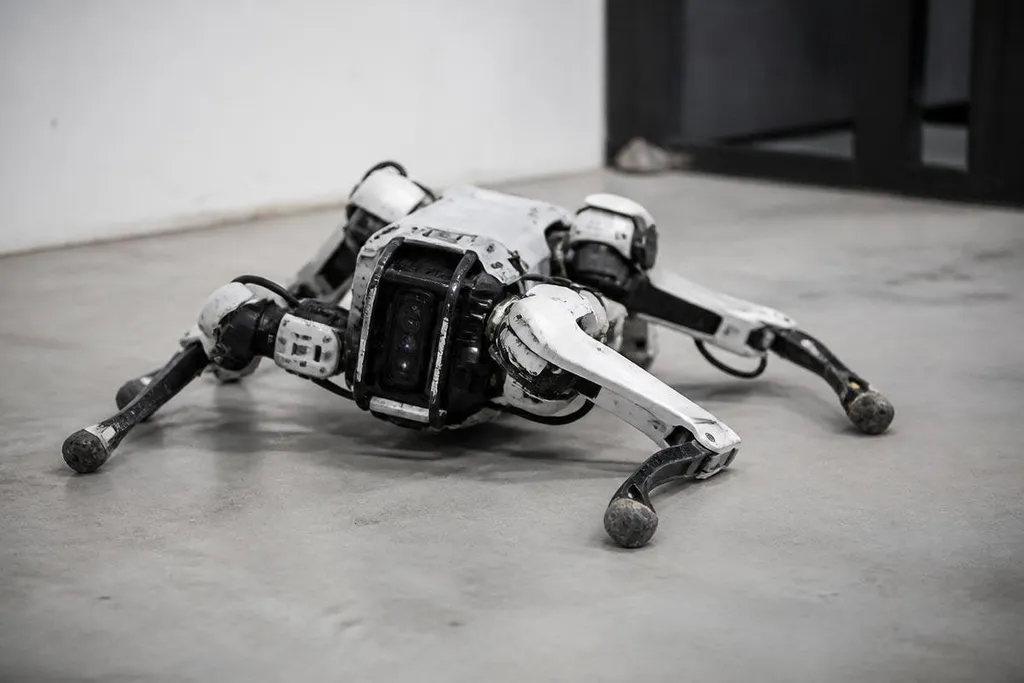
A fallen robot has to answer three questions before it moves: which way is up, what still works, and where it can safely place its weight. The answer comes from sensors, joint control, and a recovery plan built for that robot’s shape.
Quick read:
- An inertial measurement unit helps estimate the robot’s tilt and motion.
- Recovery starts with a stable pose, not with a full standing motion.
- A fall can expose damage that software cannot fix.
The first check is its own body
Most mobile robots use an inertial measurement unit, or IMU, to measure tilt and rotation. The controller compares that data with the robot’s expected upright position, then checks wheel speed, joint position, motor current, and contact sensors where available.
That check matters because the robot may not know whether it has fallen or climbed onto an unusual surface. A tilted body with working wheels needs a different response from a legged robot lying on its side. The recovery plan starts only after the controller has a useful estimate of the robot’s pose.
The robot also needs to check for damage. A motor that draws too much current, a joint that stops short, or a sensor that gives no reading can turn a normal recovery into a second fall. Good control software treats missing or conflicting sensor data as a reason to slow down and check again.
Legged robots change the contact points
A four-legged robot can often recover by moving one leg at a time. It shifts its body toward the legs still carrying weight, places another foot on the floor, and widens its support area before lifting its body.
The support area is the space enclosed by the feet touching the ground. Keeping the robot’s center of mass above that area reduces the chance of another fall. The controller therefore moves in small stages: brace, shift weight, place a foot, then raise the body.
A robot on its back has fewer easy options. It may tuck its legs, roll toward one side, or use a body panel as a contact surface. The right move depends on the shape of the frame, the grip between the feet and floor, and the force each joint can produce.
Humanoid robots face a harder problem because their feet are small and their arms may need to touch the floor. A recovery motion can place high loads on the wrists, shoulders, knees, and hips. The robot must also keep cables, cameras, and other parts from striking the ground.
A fall turns a balance error into a hardware test. The robot must sense contact, protect its joints, and choose a new motion. Robot24.com covers the machines and tests behind these recovery claims before the next section compares how wheels and arms handle a fall.
Wheels and arms use a different plan
A wheeled robot may recover by driving its wheels in reverse, changing its steering angle, or using a body-mounted arm to push against the floor. Some designs avoid the problem with a low body and a wide wheelbase, so a fall is less likely in the first place.
The arm itself can become a support. Its controller must limit force and speed so the motor does not push the robot across the floor or damage the joint. A slow push gives the sensors time to check whether the body is moving as expected.
Small indoor robots may have no way to stand after a complete rollover. In that case, recovery can mean reaching a safe stop, sending an alert, or waiting for a person. That is a valid design choice when adding motors and structure for self-righting would raise weight, cost, or injury risk.
What recovery cannot solve
A recovery routine only works inside the limits set by the hardware. Wet flooring can reduce foot grip. Loose ground can move under a support leg. A damaged camera can leave the robot unsure of its position, even when the motors still run.
The robot also needs a safe area around it. A moving arm or leg can strike a nearby person, cable, shelf, or another machine. Industrial systems may need a stop circuit, low-speed recovery mode, or remote approval before they try to stand.
I’d judge a recovery system by the failures it handles, not by one clean stand-up clip.
A practical recovery checklist
When assessing a robot’s fall response, check these points:
- Pose sensing: Can it estimate its angle after the main body moves?
- Motor health: Does it check current, temperature, and joint travel before loading a limb?
- Contact control: Can it tell when a foot, wheel, or arm touches the floor?
- Space limits: Does the routine work near walls, shelves, and people?
- Fallback action: Can it stop and ask for help when the recovery plan fails?
- Surface range: Has the maker shown how it behaves on more than one floor type?
A useful test plan starts with low-risk surfaces and records every stop, slip, and failed contact. The open question for many robots is not whether they can stand once, but whether they can detect a bad recovery early enough to avoid a second fall.